
Hedgy Ready School!


09/06/2026
Top Tips for Preparing your Child for School
The summer is fast approaching and the big milestone is getting closer - your little one(s) will soon be starting school. You may be feeling a mixture of excitement and nerves, and this is completely normal. Starting school is a huge step, but a little preparation can go a long way to easing the pressure and reducing anxiety you or your child may be feeling.
To encourage a smooth and calm transition please read our top tips and activity suggestions below. This is not a tick list and no parent should worry if their child is unable to achieve the following ideas. Instead, we hope the information will help you to support your child in getting ready for a smooth transition to school.
1. Willingness to Communicate
Being able to communicate with their friends and teachers is a very important skill for every child to have as they start school. Your child needs to feel confident in asking for help as and when they need it. At home, encourage your child to talk clearly and confidently, and have fun exploring and questioning the world around them.

2. Being Independent
At school your child will be encouraged to become more independent, to take responsibility for their belongings and attempt to have a go at tasks on their own. Help your child to remember what items they have with them by involving them in packing their bag with you. Use Hedgy’s visual checklist (included in the Hedgy Starts School book) so they can see which items they may need to pack for school. Make sure everything is labelled with their name, including their clothes and shoes.

Other things children can do is practise turning their clothes the right way round and having a go at pulling on those tricky socks or tights. Although many shoes these days use velcro to fasten them, learning to tie up shoe laces is another very useful skill. As is being able to fasten fiddly buttons and pull up zips safely. These basic skills can go a long way to helping children to feel more independent.
At school the children will change regularly for PE and possibly swimming lessons too. This can be very frustrating for children who cannot dress themselves, while they have to wait for an adult to help.
At home you can encourage your child by suggesting they help you with simple chores, such as, taking responsibility for putting their toys away after playing with them. Perhaps you may wish to encourage your child to wash up with you from time to time - most children love bubbles and immersing their hands in water.

3. Personal Care
Make sure your child can wash and dry their hands properly. It is also really helpful if your child can use the toilet on their own and manage their own hygiene. Teachers will be there to help any child who needs support, but independence in this area is important. At home, encourage your child to use the toilet, wipe themselves, flush the pan and wash/dry their hands afterwards. Also, supervise them while brushing their teeth - see our Hedgy Visits the Dentist book for guidance here - free online resources and downloadable reward charts are available at cogmazepublishing.com.

Encourage your child to blow their own nose and put the tissue in the bin.
Praise your child as they master these important life skills and start to become more independent.
Follow a good bedtime routine and encourage your child to have on average 10 hours of sleep each night. Never underestimate the importance of good quality sleep.
4. Reading
Share books with your child every day and help them to learn how to handle books with care, recognise familiar characters and join in with repeated phrases. Make hunting for sounds a fun activity by looking for them wherever you go, especially those in their name and discovering words that rhyme.
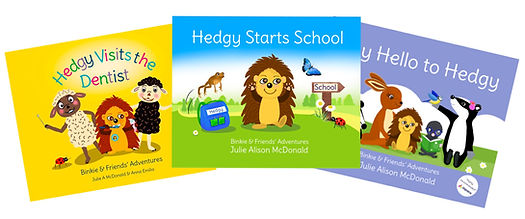
📚 Read About It: Books to prepare kids for school
Reading stories is a great way to introduce children to new concepts and prepare them for new experiences. Hedgy Starts School aims to prepare children for their first day at school. It walks children through what happens in the classroom, in the playground, and at lunch, helping them to feel comfortable and excited about this important transition. It is especially useful for those with social or sensory differences.
Hedgy Starts School - available from bookstores including Waterstones.com, juliealisonmcdonald.com or cogmazepublishing.com
5. Scissors and pencils
Using pencils and scissors can be tricky for little hands! At home, allow your child to explore, experiment and practise these skills by mark making and cutting a variety of materials - but always carefully supervise your child whilst using any sharp objects. Threading games, using tweezers and manipulating small objects, like making small animals out of play dough, can really help improve your child’s fine motor skills.

6. Counting
Being able to count is a fundamental skill which is vital in everyday life. Help your child to develop an enthusiasm for numbers by counting anything and everything such as steps, cars, sounds and actions. Encourage your child to count using their fingers as this is a great tool that is always to hand.
7. Eating
At school the children will eat lunch with their friends and teachers. Discuss with your child the options your school offers and agree on whether they would prefer to have a packed lunch or a hot school dinner.

Guide your child in using a knife and fork correctly when cutting up their food and feeding themselves, so they can do this independently at school. Encourage them to be as tidy as possible when eating. Also, scraping leftover food into the bin from their plate and leaving their crockery/cutlery over by the sink. It is important to have family meals together as they are great opportunities for developing conversation and social skills.
8. Tips for Parents
-
Visit the School: Walk or drive past the school frequently to familiarise your child with the route to school and the building.
-
Be Positive: Children pick up on your emotions. Stay calm and positive about the first day.
-
Brief Goodbyes: When the day comes, keep goodbyes short, confident, and positive.
-
Be Ready for Tiredness: The first few weeks are exhausting. Don't worry if your child is moody after school - it’s just tiredness!
I hope that these suggestions can help you and your child to feel ready and excited for the transition to school in September. If you have any questions, please do not hesitate to contact me via my contacts page.
Written by author, and illustrator, Julie Alison McDonald
9th June 2026